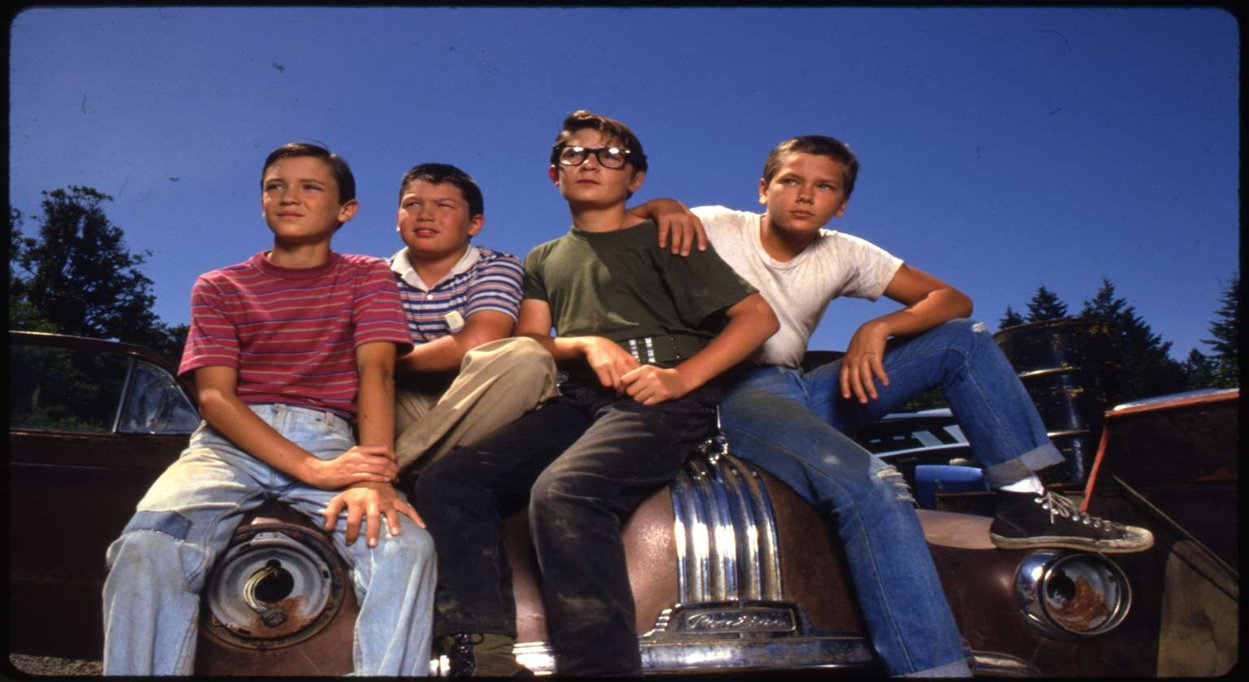
Stephen King’s novella “The Body” came out in 1982 and set the stage for the classic 1986 film adaptation. The story drops us into the summer of 1960 in Castle Rock, Maine—a place King fans know well. Four twelve-year-old boys—Gordie LaChance, Chris Chambers, Teddy Duchamp, and Vern Tessio—set out on a wild quest to find the body of a missing kid, Ray Brower. This isn’t typical King territory. Instead of monsters and haunted hotels, he digs into the messy, emotional lives of these boys as they deal with broken homes, trauma, and everything that comes with growing up.
What really sticks with people is how King nails the feeling of childhood friendship, the pain of family problems, and that bittersweet moment when you realize you’re not a kid anymore. Each boy brings something different to the table: Gordie’s quiet grief, Chris’s toughness, Teddy’s chaos, and Vern’s innocence. All of them are carrying baggage, but together, they make something bigger than the sum of their parts.
The story doesn’t just leave you in the past, either. King uses a clever framing device—adult Gordie, now a successful writer, looks back on that summer and how it changed everything for him. Those memories aren’t just nostalgia; they shaped who he became. And you can feel it, page after page.

Rob Reiner didn’t just adapt Stephen King’s “The Body”—he reshaped it. When he sat down with the story, he saw more than four boys on an adventure. He zeroed in on Gordie, the kid who never felt good enough, whose dad barely noticed him. That was the heart of the film for Reiner. He once said, “Once I made Gordie the central focus... it made sense to me: this movie was all about a kid who didn’t feel good about himself and whose father didn’t love him.” So, as Gordie goes on this wild journey with his friends to find a dead body, he starts to change. The trip, the boys, the danger—it all pushes him to see himself differently. By the end, Gordie feels stronger, surer, and you get the sense he’s on his way to becoming someone big—basically Stephen King himself.
That choice changed everything. What could have been a simple coming-of-age story turned into something deeper—a real look at growing up, finding your own worth, and how the right friends can change your whole world. Reiner’s run of films around that time—Stand by Me, The Princess Bride, When Harry Met Sally..., Misery, A Few Good Men—just stacked up as classics. That streak? It’s some of the best work to come out of Hollywood in the ‘80s and early ‘90s, hands down.

The Iconic Cast and Their Unforgettable Performances
Stand by Me has this cast you just can’t forget. Wil Wheaton plays Gordie LaChance, River Phoenix is Chris Chambers, Corey Feldman takes on Teddy Duchamp, and Jerry O’Connell becomes Vern Tessio. These guys didn’t just act—they lived those roles. Their performances really nailed what it feels like to be a teenager, and that’s probably why the film still means so much to people now.
River Phoenix, though, he’s on another level as Chris Chambers. You see this smart, sensitive kid trying to break free from what everyone expects of him, and Phoenix brings so much heart to it. He died so young, just 23, but his work here sticks with you. Even now, people think of Stand by Me as one of his best. Richard Dreyfuss shows up too, playing the grown-up version of Gordie, adding this layer of reflection and nostalgia that ties the whole story together.
Years later, when the cast got together for the 30th anniversary, Wil Wheaton remembered something the director, Rob Reiner, said—he looked at them all and said, “I feel like there should be a chair here for him,” talking about River. That moment hit hard. It really shows just how much Phoenix meant to everyone who worked on the movie, and how big a mark he left on Stand by Me.
Renaming “The Body” to “Stand by Me”: A Strategic Marketing Decision
So, here’s something funny: the movie almost had a totally different name. Columbia Pictures wanted to use Stephen King’s original title, “The Body.” But honestly, that just confused people. The screenwriter, Raynold Gideon, even joked it sounded more like a sex movie, a bodybuilding flick, or maybe another King horror story.
Rob Reiner and his team switched things up and went with “Stand by Me,” borrowing from that classic Ben E. King song you hear at the end of the movie. That choice changed everything. The new title fit perfectly—it’s about friendship, sticking together, and all the ups and downs these kids go through. Looking back, it’s hard to imagine the film called anything else. It just works.

Bringing Castle Rock to Life: The Real Stand by Me Filming Spots
Stephen King set most of his stories in the fictional town of Castle Rock, Maine, but when Rob Reiner made Stand by Me, he looked west. He shot the film in Oregon, not Maine, and Brownsville became the heart of Castle Rock on screen. The town’s old-school charm matched exactly what King described—small-town America, a little rough around the edges but full of character.
A lot of the movie’s most memorable moments happened right in Brownsville. Main Street is where Gordie bumps into Ace Merrill after leaving the store. If you’re looking for the Blue Point Diner, that’s at 419 North Main Street. That’s where Gordie fires off that warning shot behind the diner—one of those scenes you just don’t forget. The cast didn’t stay put, though. They also filmed in places like Cottage Grove, Eugene, Franklin, Veneta, and Junction City. Some scenes even took them down to Northern California, to towns like Burney and McCloud.
But if there’s one spot every fan wants to see, it’s the Calapooia River Bridge on Main Street. That’s where the four boys start their adventure, walking across the bridge with the world ahead of them. These days, people still come from all over just to stand where their favorite characters once stood, retracing the steps of their own childhood heroes. It’s more than just a movie scene—it’s a piece of nostalgia you can actually visit.

The Cultural Impact and Lasting Legacy of Stand by Me
Even after 35 years, Stand by Me still hits a nerve. It’s more than just a movie—it’s a cultural landmark that keeps shaping storytellers and filmmakers, even now. Stand by Me basically set the standard for the modern coming-of-age story. Filmmakers keep borrowing from it. You see its fingerprints all over shows like Stranger Things or Star Wars: Skeleton Crew, with those groups of kids stumbling into the unknown in their own neighborhoods.
The film nails a feeling that’s tricky to describe—half nostalgia, half unease. It brings Stephen King’s original story to life with that weird mix of small-town, retro Americana and the raw, awkward truth that, honestly, kids are just strange sometimes. There’s humor, real emotion, even a bit of horror, all mixed together in a way that just feels true. That’s what makes it stick with people. It’s proof that you can take a book and turn it into something special without losing what made it great in the first place.
Rob Reiner’s direction is a big part of why the movie works so well. Sure, it’s tough to put a number on how much he’s shaped pop culture, but Stand by Me really stands out as one of his best. It’s one of those rare Stephen King adaptations that feels just right. The movie’s influence is everywhere, still shaping how people tell stories about growing up in America. It’s not just an old classic—it’s the blueprint for coming-of-age stories, and it’s not going anywhere.
Comments
Leave a Comment
No comments yet. Be the first to share your thoughts!