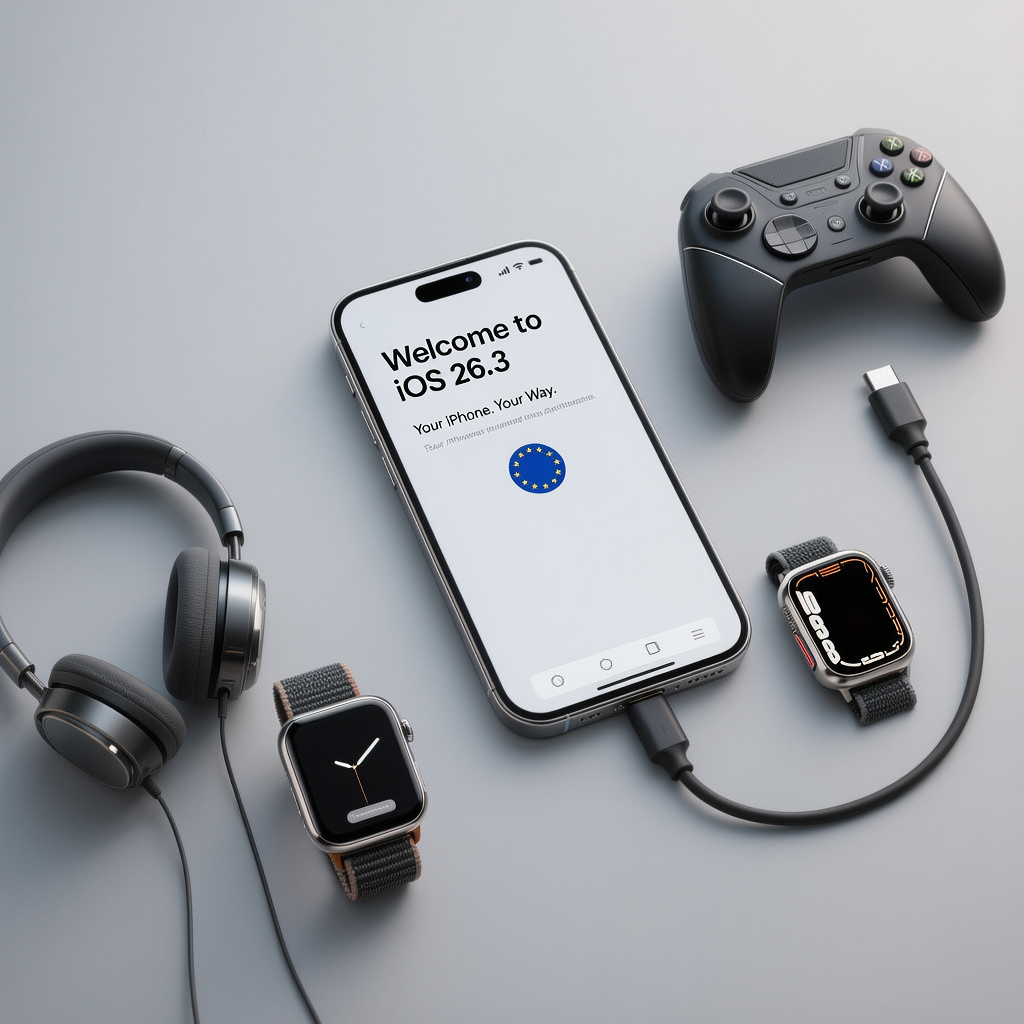
A closer look at iOS 26.3: What to Expect and When
Apple’s rolling out iOS 26.3 mainly to line up with new European Union rules, but outside Europe, things pretty much stay the same. If you’re waiting for the update, it should land for everyone toward the end of January 2026, right after they wrap up beta testing.

Beta Testing and Development Status
Apple’s been running iOS 26.3 through its paces with developers and a handful of regular users. This kind of staged beta testing helps them catch bugs and smooth out any rough spots before tossing the update out to everyone. Honestly, it shows they care about keeping things stable and making sure the new features actually work across all the different devices people use.
Geographic Implementation: Europe-First Rollout
Here’s a key detail: those new third-party pairing features in iOS 26.3? For now, only folks in the European Union get to try them. Apple’s sticking to a region-specific plan, mainly to line up with local rules. So, if you’re outside Europe, you won’t see these upgraded pairing options just yet. Apple’s hinted they might open it up more later on, but right now, it’s EU only.
The EU Digital Markets Act: Context and Requirements
To really get why iOS 26.3 matters, you have to look at what’s going on with regulations. The European Union’s Digital Markets Act (DMA), which kicked in for 2024, is a pretty big deal. It’s one of the toughest sets of rules out there for tech giants, all designed to keep the digital marketplace fair and give smaller players a real shot. That’s the main driver behind these changes in iOS 26.3.

DMA Objectives and Implementation
The DMA specifically targets "gatekeeper"
platforms—large digital platforms with significant market power that
control access to markets for other businesses. Apple qualifies as a gatekeeper
under the DMA due to iOS's market dominance in Europe and its control over app
distribution and ecosystem integration. The regulation requires gatekeepers to:
- Enable
third-party developers to achieve functional parity with the
gatekeeper's own services
- Ensure
interoperability between their platforms and third-party devices
and services
- Remove
artificial barriers to switching between platforms
- Provide
fair access to essential services and data
Instead of pushing back against the DMA, Apple is taking a different route. They’re rolling out changes bit by bit—just enough to check the legal boxes but still hang on tight to control over their own ecosystem. The iOS 26.3 update is part of that play. With this release, Apple added new ways for third-party devices to connect, pretty much because the DMA forced their hand.
European Commission’s Response
The European Commission isn’t ignoring Apple’s moves. Officials have said iOS 26.3 is “significant progress” on the DMA front. Basically, Apple’s changes are hitting the mark, at least for now. Even so, it sounds like there’s more work ahead, and future updates will probably need to go further.
New Features in iOS 26.3: Third-Party Device Pairing
iOS 26.3 brings in a bunch of fresh features aimed at letting third-party device makers offer stuff that feels just as smooth as Apple’s own ecosystem. In short, these changes shake up how outside accessories talk to the iPhone and iPad.
Proximity Pairing for Third-Party Devices
Proximity pairing stands out as a big deal in this update. Now, wireless accessories from other brands—think earbuds, headphones, and any Bluetooth gadget—can spot and pair with your iPhone or iPad automatically, the moment they’re close enough.
Before this, pairing third-party devices was kind of a pain. You had to dig into your iPhone’s settings, pick the accessory from a list, and tap through a bunch of setup steps. With proximity pairing, all that hassle disappears. It’s just as easy as pairing AirPods, which longtime Apple users have come to expect.

How Proximity Pairing Works
When you bring a third-party device that supports proximity pairing near your iPhone or iPad running iOS 26.3 in Europe, your iPhone just picks it up right away. It pops up a pairing prompt on its own—no digging through menus or fiddling with settings. You just tap to confirm, and you’re done. That’s it.
Honestly, this is a big deal. Apple used to keep this kind of smooth pairing just for its own stuff. Now, European companies that make third-party devices can give their customers the same easy, Apple-level experience. It cuts down the hassle and makes buying and setting up new gadgets a lot more appealing.
Third-Party Device Notifications
With iOS 26.3, your iPhone or iPad can finally show notifications from third-party smartwatches, fitness trackers, and other wearables—right on your main device. Before this, if you had a non-Apple watch, you either missed out on notifications or had to put up with clunky workarounds that just weren’t great.
Notification Feature Capabilities
Now, when a notification comes in on your third-party smartwatch with iOS 26.3, you can:
- View
notification content directly on the wearable device
- Respond
to messages using voice, quick-reply templates, or handwriting
input (depending on device capabilities)
- Take
actions prompted by notifications, such as accepting or declining
meeting requests
App developers get a big win too. Thanks to a deal between Apple and the European Commission, iOS 26.3 now lets developers test their apps directly on third-party smartwatches, TVs, and headphones. They don’t have to wait for Apple to give the green light or step in. This opens the door for developers to fine-tune their apps for all sorts of devices, not just Apple’s.
Now, developers can start testing as soon as iOS 26.3 drops. But the full rollout — where third-party TV apps, smartwatch features, and headphone support go live for everyone — that’s set for 2026 across Europe. So, there’s plenty of time to iron out any kinks before the public gets their hands on it.
For companies making accessories outside the Apple bubble, this is huge. iOS 26.3 finally gives them a real shot at competing, especially in the EU, where Apple’s ecosystem has always had the upper hand. This update shakes things up and gives everyone a fairer chance.

Competitive Advantages for Third-Party Brands
With proximity pairing and notification capabilities,
third-party manufacturers can now offer products that provide:
- Seamless
pairing experiences comparable to Apple devices
- Native
notification integration that European users expect from modern
wearables
- Apple
ecosystem compatibility without requiring Apple's approval for
each feature
Manufacturers aren’t wasting any time. Companies making smartwatches, earbuds, and fitness trackers are already working on new products that take full advantage of iOS 26.3’s pairing and notification upgrades. For them, these DMA rules are a real door-opener—not just for Europe, but eventually for other markets, too.
Of course, there’s more to iOS 26.3 than just better third-party pairing. The update brings a bunch of improvements for everyone with an iPhone or iPad, no matter where you live.
Take the new wallpaper and weather interface, for example. Apple separated weather info into its own section on the wallpaper screen, instead of lumping it in with astronomy like before. You get new weather-themed wallpaper choices, too, which makes personalizing your phone a bit more fun.
This tweak comes straight from user feedback. People said the old design was confusing—weather and astronomy ended up in the same spot, so you’d miss things or mix them up. Now, each gets its own space, and it’s just easier to see what you want.
One more thing: Apple and Google teamed up to make it way simpler for Android users to switch to iPhone. With iOS 26.3, moving your stuff over is smoother than ever. At the same time, Google’s rolling out similar features for people jumping from iPhone to Android. That’s a big deal, considering these two companies usually go head-to-head.
How Android Transfer Works
Users switching from Android devices can now utilize
dedicated transfer tools that facilitate:
- Automatic
data migration of contacts, calendar events, and photos
- App
transfer or app recommendations for iPhone equivalents
- Settings
preservation where possible
This collaborative approach improves the user experience for individuals switching between ecosystems, addressing one of the primary friction points in cross-platform transitions.

With iOS 26.3, the Weather app gets a noticeable upgrade. The new version doesn't just look nicer—it makes checking the weather and planning your day a whole lot easier.
Implementation Challenges
Even though iOS 26.3 moves Apple closer to a more connected ecosystem, rolling it out isn’t simple. There are real technical and practical hurdles Apple needs to clear.
Backward Compatibility
Getting these new features to work smoothly on every iPhone and iPad out there is no small feat. Apple has to test the update on everything from older phones to the latest models, making sure nothing breaks and everything runs well. It’s a tough balancing act—adding cool new stuff without making older devices feel sluggish or left behind.
Third-Party Device Readiness
A lot hinges on outside manufacturers. For iOS 26.3’s new features like proximity pairing and better notifications to shine, third-party devices need to be up to speed. That means those companies have to put time and money into figuring out how Apple’s tech works—and then make sure their own hardware plays along nicely.
User Adoption and Awareness
At the end of the day, these features only matter if people actually use them. European customers need to know about third-party devices that tap into what iOS 26.3 can do. Apple isn’t likely to shout from the rooftops about features that help its rivals, so it falls on third-party brands to get the word out and show people why they should care.
Global Impact: Looking Past Europe
Right now, iOS 26.3’s third-party features are only rolling out in Europe, but let’s be real—regulations like the DMA aren’t staying put. Other countries are already eyeing what’s happening, and it’s only a matter of time before similar changes hit iOS in more places. Here’s what stands out from the European launch:
A Playbook for New Rules
The DMA pushed Apple to change iOS 26.3, and that’s set the stage for regulators everywhere. Canada, the UK, and a few others are taking notes and getting ready to introduce their own digital rules. If they follow Europe’s lead, iOS will start to look different in more countries, with new features popping up to meet local requirements.
Apple’s Bigger Game Plan
Apple’s move to roll out features based on region isn’t just a quick fix—it’s a sign of a bigger strategy. Instead of making iOS the same everywhere, Apple seems fine with running different versions depending on local laws. So, your iPhone in one country might have options you just can’t get somewhere else. It’s a shift from Apple’s old “one-size-fits-all” approach, and it shows they’re serious about adapting to new rules.
A More Competitive Ecosystem
Opening iOS to third-party devices—thanks to the DMA—shakes up the old Apple-dominated landscape. Now, other manufacturers get a real shot to compete and offer high-quality options. That means more choices and, hopefully, more innovation for everyone who uses an iPhone or iPad.
A Turning POS 26.3 Meansoint: What i
Let’s not downplay it—iOS 26.3 marks a turning point for Apple. The update proves that even the biggest, most tightly controlled tech companies have to listen when regulators push back. For people in Europe, this means better support for third-party accessories and smoother integration right now.
The impact goes way beyond this single update. iOS 26.3 shows that tough digital regulations actually work—they can force real, useful changes to how tech giants operate. Consumers win, with more choices and devices that play nicely together. And as more countries enforce similar rules, expect Apple and other platform owners to keep adapting, slowly opening up their systems and making things less locked-down.
For third-party manufacturers, this is a huge opportunity. Now they can compete with Apple on fairer terms, at least in the EU. If this approach takes off, it might push Apple to open up even more in other parts of the world, and maybe we’ll see future versions of iOS work better with devices from all kinds of brands, not just Apple’s own.
Comments
Leave a Comment
No comments yet. Be the first to share your thoughts!